
Employees asked to work from home... cancelled travel plans... curtailed meetings... Caution and precaution dominate Corporate India's response to Covid-19.
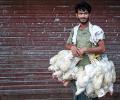
Weak demand from the poultry sector has resulted in a sharp decline in feed prices too, with both soybean and maize prices falling by nearly 25 per cent in the past two months. The poultry market consumes around half of soybean and maize production in India.

'There is a clear business impact. People are avoiding crowded places and gatherings across cities. This is hitting business, both at traditional and modern trade outlets, during the Holi season, which kicked off from Saturday,' says Praveen Khandelwal, general secretary, Confederation of All India Traders (CAIT).
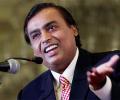
RIL's stake in Network18 would reduce to 64 per cent, from 75%, following the merger
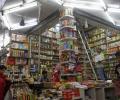
The first to see price hikes will be soaps. In the past six months, domestic palm oil prices have increased by 46 per cent. Palm oil is a key input going into soaps.

After years of giving free passes to counterparts from Korea, Japan, US in the Indian auto market, Chinese automakers had planned a major push to grab the fifth largest car market in the world. But the shutdown of factories and logistics hubs in the country following the outbreak of coronavirus is slowly constricting the business of Chinese auto majors which have recently entered India.

The number of participating automakers has fallen from 50 in 2018 to 30 this year. The count of exhibitors, including technology companies, has come down from 119 to 112. And showstopper luxury and supercar brands, including Toyota, Jeep, Lamborghini, Porsche, and Volvo will be missing. Similarly, the commercial vehicle makers also gave the show a miss -- a prolonged economic slowdown has dented their fortunes and near chances of any recovery.
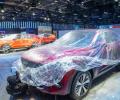
Owing to the poor market conditions and tepid sentiments, the size of the show has shrunk compared to the last edition, which took place in 2018. A majority of the two-wheeler makers, and several car and commercial vehicle makers, have opted out of this year's show, which opens for the media on Wednesday.
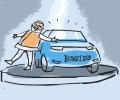
From Hyundai to Tata Motors, automakers are staring at a bleak future. With no succor provided in the Budget, the pain for companies is likely to continue for the next two quarters.

Chinese automakers Great Wall Motors, FAW Haima Automobile, and Changan Automobile, after dithering about entering India for some years, have been encouraged by the robust sales performance of the late entrants Kia Motors and MG Motors even in a slowing market.

Experts feel that mall owners anticipate an increase in costs to the tune of 15-20 per cent annually, prompting a mixed response to the '24 hours' initiative. A mall owner said while the policy is good in spirit, implementing it would be a challenge as night shopping or eating out wasn't a habit in Mumbai yet.

It's the first time in its 178-year-old history that the iconic British motorcycle firm owned by the Bloor family has got into an alliance. Three years after announcement, the two companies formally signed on the dotted lines on Friday for a long-term partnership, which aims to achieve global scale in a segment in which Royal Enfield has head-start.

'As long as people are eating we will be there,' Rebel Foods CEO Jaydeep Barman tells Viveat Susan Pinto and Niraj Bhatt.

This number is more than the total number (1,071) of electric cars sold in India in calendar year 2019. MG has stopped registrations for the ZS and will cater to 2,409 of the total bookings.
The move marks the entry of GWM, one of the largest manufacturers of sport utility vehicles (SUVs) and pick-ups, into the Indian market and a complete exit for GM from the country, two years after it stopped selling cars here.

The BS-VI norms are expected to increase the price of two-wheelers by 10-14 per cent.

Morgan Stanley Sales & Trading, US, believes the stock is better value for money than others and has a upside as high as 73 per cent. A slowdown in the economy has hit demand and led to a fall in overall consumption in an auto market which till recently was one of the fastest growing in the world.

Almost all the big mall developers/investors - such as Raheja-owned Inorbit Malls, Xander-APG joint venture Virtuous Retail South Asia (VRSA), property developer Prestige Estates Projects, and Blackstone-owned Nexus Malls - are looking to double their space in a year or two.

While Unilever has been aggressive, both organically and inorganically in the country, P&G's approach has been about achieving 'balanced growth' in terms of top line and bottom line.

Sinha, who had both agency and client experience having worked at Coca-Cola in the 1970s and early 1980s, was the first woman to set up a national advertising agency. While Tara Sinha Associates was launched in 1985, Clarion was launched way back in 1955 at the start of her career.
 © 2026 Rediff.com - Advertise with us - Disclaimer - Privacy Policy - Sitemap - Feedback - About us - Terms of use - Grievances